The Damariscotta Mills Fish Ladder restoration is being carried by the towns of Nobleboro and Newcastle in collaboration with the Nobleboro Historical Society. The team works closely with numerous community based non-profit organizations and state & federal agencies.

Restoration of the fish ladder is critical to the health of the Damariscotta River alewife stocks. Alewives are an important part of the food chain and they contribute to the health of the marine environment and to the lakes and streams where the fish spawn. In the spring, alewives are a critical source of fresh bait for local lobstermen who are setting out gear after a winter ashore. The Towns of Newcastle & Nobleboro have harvested alewives since the 1700s and, by balancing conservation and economic goals, they have carefully tended the Damariscotta River alewife stocks. Today, all funds received for harvested alewives are spent to maintain the fish ladder and harvesting area.

To see more, including photo slideshows of the restoration progress, please visit the website at www.damariscottamills.org

The Nobleboro Historical Society
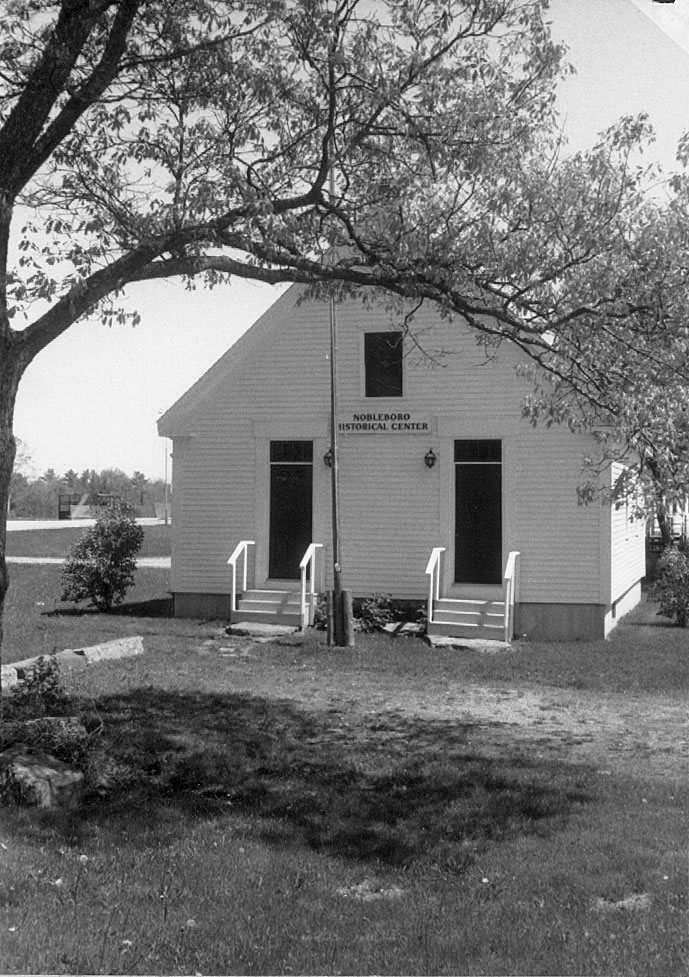
Chartered in 1978, the Nobleboro Historical Society has a membership of about 200. Programs of special interest are presented during the year. School children, in June, also come to the Historical Center to view the exhibits and learn about Nobleboro history.

The Society has a fine collection of memorabilia and maintains records related to Nobleboro and its people. These are preserved at the Historical Center.

On June 9, 2006 we lost our dear friend and Town Historian George Dow. Though George is no longer with us, the information he assembled to document the history of Nobleboro will live on forever. If you would like to read more about the long and productive life of George, click here.

The Town of Nobleboro
Nobleboro was first settled in the 1720’s when the British Crown sent Colonel David Dunbar to rebuild the fort at Pemaquid. With that prospect of security, other settlers would, it was hoped, be attracted to the area. Colonel Dunbar built his home "Belvidera" (Beautiful View) in Nobleboro on a point of land overlooking Great Salt Bay.

By 1788 the settlers in the Nobleboro area, then a part of the Walpole plantation, were ready to make the settlement official. Leading this effort was Arthur Noble, Jr., son of Lieutenant Colonel Arthur Noble, commander of the second Massachusetts Regiment in 1745 during the siege and fall of the fortress of Louisburg on Cape Breton Island. He was commander of many men from the Province of Maine. The monument in Nobleboro Center, located across from the Baptist Church, was erected in his honor.

The town of Nobleborough was incorporated November 20, 1788. The tract of land that initially comprised the town then included most of what is now the town of Damariscotta. This area was set off from Nobleborough and became a town in its own right in 1848.

For more information, please contact
Mary Sheldon, President, 207-563-5376
sheldon@tidewater.net
Address of Nobleboro Historical Society
P.O. Box 122, Nobleboro, ME 04555